

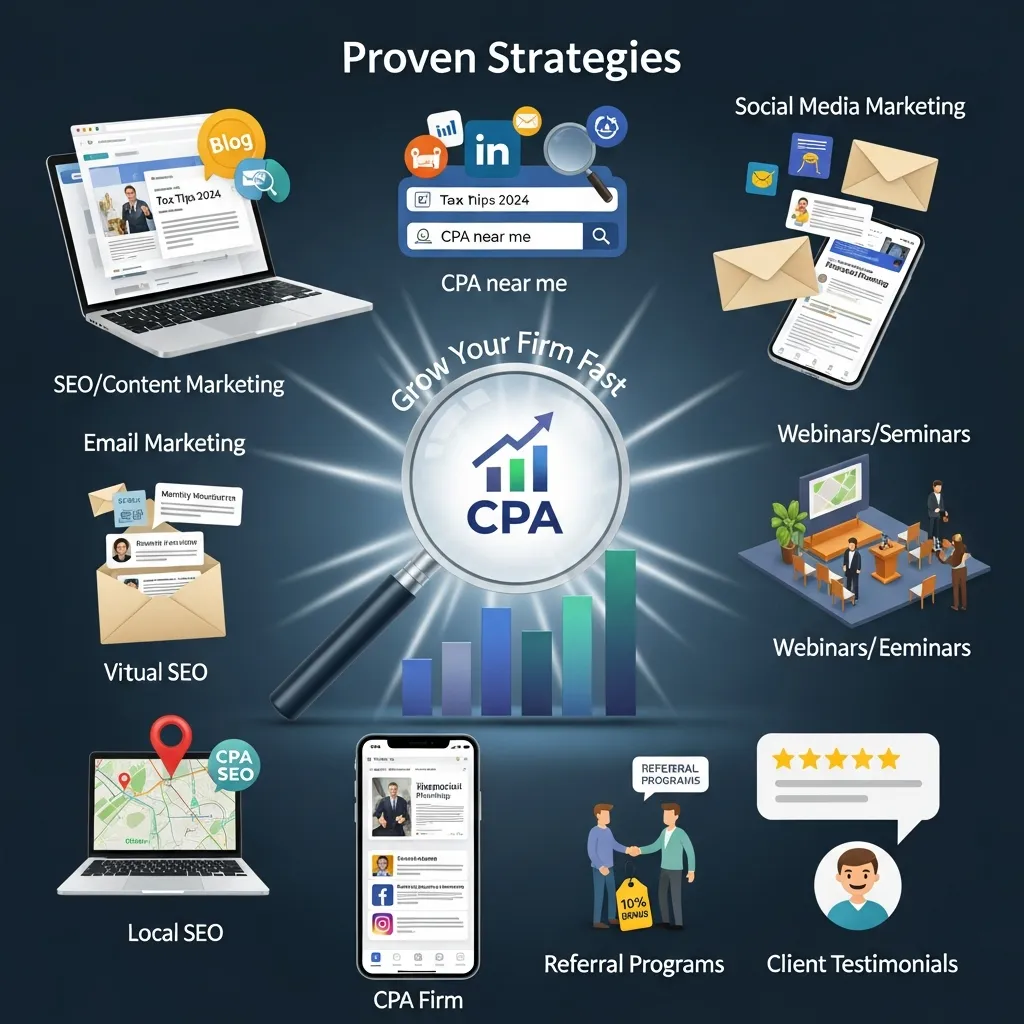
Proven CPA Marketing Strategies focus on identifying ideal clients, building a robust online presence through local SEO, leveraging digital advertising like PPC, and nurturing leads via structured email campaigns. By implementing these targeted tactics, accounting professionals can predictably attract high-value clients, master CPA marketing, and establish long-term industry authority.
The accounting industry is shifting rapidly. Gone are the days when a Certified Public Accountant (CPA) could rely solely on a yellow pages listing or passive word-of-mouth recommendations to build a thriving book of business. Today, potential clients search for financial guidance online, reading reviews, comparing services, and looking for thought leaders who clearly understand their specific financial challenges.
This guide, “Master CPA Marketing,” demystifies effective techniques and provides actionable insights for accounting professionals looking to expand their reach. Whether you run a solo practice or manage a mid-sized regional firm, implementing modern outreach techniques is mandatory for survival and growth.
By applying Proven CPA Marketing Strategies, you can systematically attract your ideal clientele, increase your firm’s revenue, and build a brand that commands trust. This comprehensive breakdown will serve as your ultimate playbook, ensuring that your firm’s value proposition reaches the right audience at the exact moment they need financial expertise. Let us dive into the core methodologies that get results.
How do accounting firms identify their target audience?

Finding the right clients is the foundational step of any successful campaign. Many accountants make the mistake of trying to serve everyone, which dilutes their messaging.
Identifying ideal clients for CPA services
To deploy Proven CPA Marketing Strategies effectively, you must define who you want to help. Look at your most profitable and enjoyable current clients. Are they real estate investors, small healthcare clinics, or freelance tech consultants? Define their demographics, annual revenue, and specific pain points. Understanding these details allows you to craft messaging that resonates deeply with decision-makers.
Market segmentation and niche strategies
Choose a specific industry niche if dominating a local market matters more to you than broad, generalized appeal. For example, a firm that specializes in tax preparation for dental practices can charge premium rates and market itself as an exclusive expert. CPA Marketing Demystified usually begins with this simple truth: owning a narrow niche is far more profitable than competing in a crowded generalist market.
How can CPAs build a strong online presence?
Your digital footprint acts as your firm’s 24/7 digital storefront. Potential clients will judge your credibility based on what they find when they search your name.
Website optimization for CPAs
A fast, mobile-friendly website is critical. Your site must clearly state what you do, who you serve, and how visitors can contact you. Ensure your website loads in under three seconds, as slow load times directly increase bounce rates. Include clear calls-to-action (CTAs) like “Schedule a Free Tax Consultation.”
Local SEO for accounting firms
Local Search Engine Optimization (SEO) ensures your firm appears when someone searches for “CPA near me.” Claim and optimize your Google Business Profile. Ensure your firm’s Name, Address, and Phone number (NAP) remain consistent across all online directories. Encourage satisfied clients to leave positive Google reviews, as these heavily influence local search rankings.
Content marketing: blogs, articles, and whitepapers
Publishing high-quality content answers your prospects’ most pressing financial questions. Write blog posts about recent tax law changes, create whitepapers on cash flow management, or publish articles on payroll compliance. This positions you as an authority and serves as a core pillar of Proven CPA Marketing Strategies.
What are the best digital advertising strategies for CPAs?
Organic growth takes time, but digital advertising can generate immediate visibility and fast-track your lead generation efforts.
Pay-per-click (PPC) campaigns for CPAs
Google Ads allow you to bid on specific search terms like “small business accountant in Chicago.” You only pay when a user clicks your advertisement. PPC campaigns are highly effective because they capture prospects with high intent—people actively looking to hire an accountant right now.
Social media advertising strategies
Platforms like LinkedIn and Facebook offer sophisticated targeting options. LinkedIn advertising works exceptionally well for Business-to-Business (B2B) accounting firms. You can target users by job title (e.g., CEO, Founder) or company size, ensuring your firm’s ads only appear to qualified decision-makers.
Retargeting and display ads
Not every visitor will contact your firm on their first website visit. Retargeting ads follow previous website visitors across the internet, displaying your firm’s banner on other sites they visit. This keeps your accounting practice top-of-mind until the prospect is ready to schedule a consultation.
How does content creation drive engagement for accounting firms?

To truly Master CPA Marketing, your firm must produce content that educates and engages potential clients.
Crafting valuable content: “CPA Marketing Demystified”
Develop content that breaks down complex financial topics into easy-to-understand language. When you explain the nuances of business structuring or R&D tax credits without using heavy jargon, business owners feel empowered. This builds immense trust before you ever speak to them directly.
Video marketing and webinars
Video content generates higher engagement rates than text alone. Host quarterly webinars discussing tax planning strategies before the end of the financial year. Record short, two-minute videos answering common client questions and post them on your website and social media channels.
Lead magnets and gated content
Offer a high-value downloadable resource, such as a “Year-End Tax Preparation Checklist,” in exchange for a visitor’s email address. This tactic converts anonymous website traffic into known prospects that you can nurture over time.
How can email marketing nurture accounting leads?
Email remains one of the highest-converting digital channels. It allows you to maintain consistent communication with your audience.
Building an email list
Never purchase email lists. Instead, build your list organically using the lead magnets mentioned above. Collect emails during networking events, webinars, and through your website’s contact forms.
Segmentation and personalization
Divide your email list based on client types. Send corporate tax updates to your business clients and individual tax tips to personal finance clients. Personalized emails experience significantly higher open and click-through rates.
Nurture sequences and newsletters
When a new prospect downloads your lead magnet, trigger an automated sequence of emails. Introduce your firm, share a client success story, and invite them for a consultation. Follow this up with a monthly newsletter containing actionable financial advice, effectively utilizing Proven CPA Marketing Strategies to stay relevant.
Which social media platforms work best for CPA firms?
Social media humanizes your brand and provides a platform to share your expertise openly.
Platform selection for CPAs
LinkedIn is the premier network for B2B accounting professionals. Facebook works well for firms targeting local small business owners or individuals. Twitter (X) is excellent for sharing quick financial news and participating in industry discussions. Choose one or two platforms and commit to them fully.
Building a community
Do not just broadcast promotional messages. Engage with your followers. Ask questions about their biggest financial headaches, run polls regarding their preferred accounting software, and celebrate the milestones of your clients’ businesses.
Utilizing social listening
Monitor social media for mentions of accounting struggles. If local business owners complain in a Facebook group about confusing payroll laws, step in to offer helpful, non-salesy advice. This positions you as a helpful expert rather than an aggressive salesperson.
How can CPAs build thought leadership and PR?
Establishing yourself as an industry expert unlocks opportunities that standard advertising cannot buy.
Media outreach and press releases
Send press releases to local news outlets when your firm achieves a significant milestone, such as opening a new office or hiring a high-profile partner. Pitch yourself to local journalists as a financial expert they can call when reporting on economic news or tax season.
Speaking engagements and presentations
Offer to speak at local Chamber of Commerce meetings, industry conferences, or rotary clubs. Presenting actionable financial strategies to a room full of business owners is one of the most effective Proven CPA Marketing Strategies for generating immediate referrals.
Publishing articles in industry journals
Submit guest articles to industry-specific publications. If your niche is construction accounting, write an article for a national construction trade magazine. This borrows the publication’s credibility and passes it directly to your firm.
How do CPA firms build effective referral programs?
Referrals remain the lifeblood of the accounting profession, but you must systematically encourage them.
Cultivating client referrals
Do not wait for clients to refer you by accident. Ask your most satisfied clients for introductions to other business owners. Offer a formalized referral incentive, such as a discount on next month’s retainer or a gift card to a premium local restaurant.
Collaborating with complementary businesses
Build strategic partnerships with business attorneys, financial planners, and commercial insurance brokers. These professionals share your target audience but do not compete with your services. Establish a mutual referral agreement to consistently trade high-quality leads.
How should CPAs measure their marketing efforts?
Without tracking your performance, you cannot scale what works or fix what is broken.
Key Performance Indicators (KPIs) for CPA marketing
Track metrics that directly impact your revenue. Monitor your Customer Acquisition Cost (CAC), the number of qualified leads generated per month, your website conversion rate, and your overall Return on Investment (ROI) for advertising spend.
Using analytics tools
Install Google Analytics 4 on your website to track visitor behavior. Use Customer Relationship Management (CRM) software like HubSpot or Salesforce to track where your most profitable leads originate.
A/B testing and optimization
Test different versions of your marketing assets. Run two different Google Ads with distinct headlines to see which generates more clicks. Send two variations of an email subject line to determine which secures higher open rates. Continuous testing is how you successfully Master CPA Marketing.
How can CPAs optimize marketing for AI visibility?
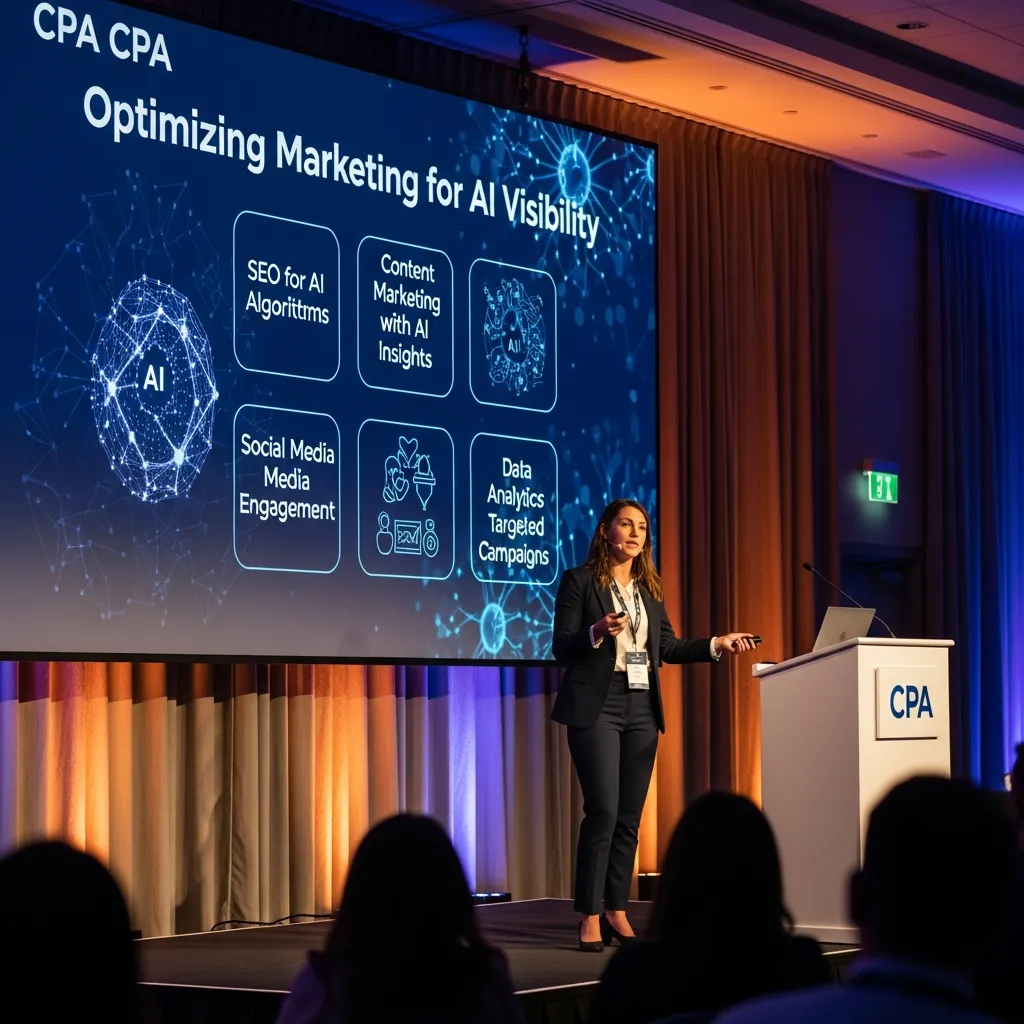
Search engines are evolving into Answer Engines, relying heavily on artificial intelligence to provide direct responses to users.
Structuring content for search algorithms
Format your website content to directly answer user questions. Use clear headers and provide short, concise answers immediately below those headers. This increases the likelihood that AI systems will extract your text for AI Overviews.
Semantic SEO and entity recognition
Search algorithms now understand topics, not just keywords. Ensure your content covers all related concepts (entities) surrounding a topic. If you write about “business taxes,” also discuss related entities like “deductions,” “IRS compliance,” and “quarterly estimates.”
Voice search optimization
Optimize for voice assistants like Siri and Alexa by using natural, conversational language. People type “CPA Chicago,” but they speak, “Who is the best small business accountant near me?” Adjust your Proven CPA Marketing Strategies to capture these long-tail, conversational queries.
Sustaining Your CPA Marketing Success
Succeeding in the modern financial landscape requires dedication and strategic execution.
Recap of Proven CPA Marketing Strategies
To grow your firm, identify a profitable niche, optimize your digital footprint with strong local SEO, leverage targeted PPC advertising, and build authority through content and email marketing. Engage actively on LinkedIn, pursue speaking engagements, and systematically generate referrals through strategic partnerships.
Future trends in CPA marketing
The future of accounting marketing relies heavily on artificial intelligence, hyper-personalization, and video content. By staying adaptable and tracking your KPIs meticulously, your firm will not only survive the shifting landscape but dominate it. Implementing these Proven CPA Marketing Strategies ensures you Master CPA Marketing and secure long-term profitability.
Frequently Asked Questions
1. What are the most effective Proven CPA Marketing Strategies for small firms?
For small firms, the most effective Proven CPA Marketing Strategies include optimizing Google Business Profiles for local SEO, developing strategic referral partnerships with local attorneys, and executing targeted LinkedIn outreach campaigns. These tactics require minimal financial investment while yielding high-quality, targeted leads.
2. How can I “Master CPA Marketing” with a limited budget?
You can Master CPA Marketing on a tight budget by focusing on organic, time-intensive methods. Publish educational content on LinkedIn, attend local networking events, ask current clients for referrals, and write SEO-optimized blog posts answering common financial questions.
3. What role does SEO play in CPA Marketing?
SEO ensures your accounting firm appears at the top of search engine results when potential clients look for financial services. By optimizing your website with relevant keywords and securing local directory listings, SEO drives consistent, passive, and highly qualified traffic to your firm.
4. How often should CPAs post on social media for effective “CPA Marketing Demystified”?
To achieve results with CPA Marketing Demystified, accounting firms should post high-quality content on LinkedIn two to three times per week. Consistency is more important than frequency; ensure every post provides genuine value, actionable advice, or industry insights to your target audience.
5. Are video testimonials effective for CPA services?
Yes, video testimonials are highly effective. Accounting requires immense trust, and seeing a real business owner speak highly of your firm builds social proof much faster than written text. Use these videos on your landing pages and social media channels to increase conversion rates.
6. What are the best metrics to track for CPA marketing success?
The best metrics to track include Cost Per Lead (CPL), Website Conversion Rate, Client Lifetime Value (CLTV), and Return on Ad Spend (ROAS). Tracking these specific indicators tells you exactly which Proven CPA Marketing Strategies generate actual revenue for your firm.
7. How can AI help in implementing Proven CPA Marketing Strategies?
AI helps implement Proven CPA Marketing Strategies by automating repetitive tasks, generating blog post outlines, analyzing large datasets to identify client behavioral trends, and powering website chatbots to capture leads 24/7 without human intervention.
8. What is the importance of a niche in CPA marketing?
Choosing a niche allows your firm to transition from a generalist commodity to an exclusive specialist. Niche marketing reduces competition, allows you to charge premium rates, and makes your messaging far more relevant to specific business owners.
9. How do I choose the right social media platforms for my CPA firm?
Choose your platform based on your target audience. If you target corporate executives and B2B clients, prioritize LinkedIn. If you target local families for personal tax preparation or small mom-and-pop retail shops, prioritize Facebook and local community groups.
10. Can content marketing truly help me “Master CPA Marketing”?
Yes, content marketing is a core pillar to Master CPA Marketing. By consistently publishing articles, videos, and whitepapers that solve specific financial problems, you build unparalleled trust and authority, effectively pre-selling prospects before they even schedule a consultation.
11. What are common pitfalls to avoid in CPA marketing?
Common pitfalls include trying to appeal to everyone, using overly complex financial jargon in marketing materials, ignoring local SEO, and failing to track the ROI of marketing campaigns. Avoiding these errors is critical to deploying Proven CPA Marketing Strategies successfully.
12. How can I ensure my Proven CPA Marketing Strategies comply with ethical guidelines?
Ensure your Proven CPA Marketing Strategies comply with ethical guidelines by avoiding guarantees regarding tax outcomes, maintaining strict client confidentiality in your case studies (using anonymized data), and strictly adhering to the marketing and advertising rules set forth by your state’s Board of Accountancy.


Leave a Reply