

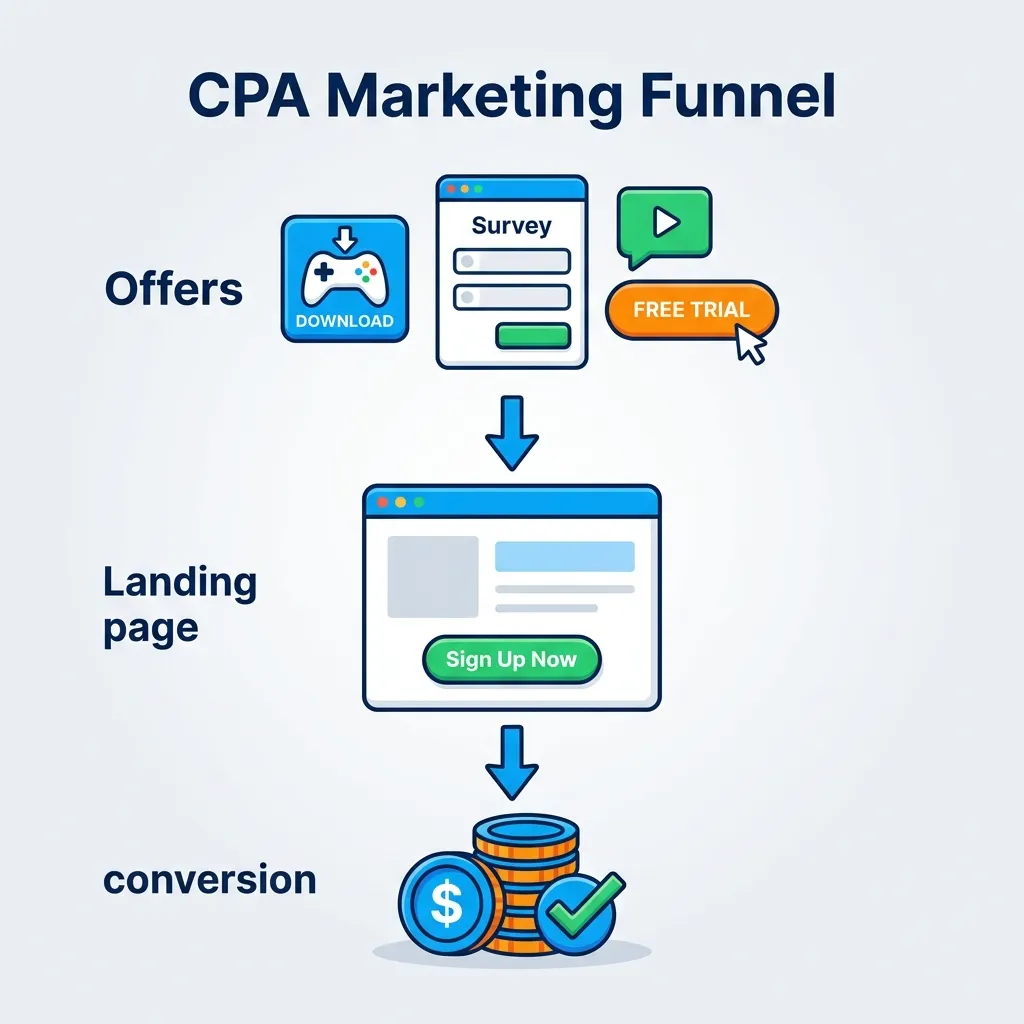
CPA (Cost Per Action) marketing is an affiliate advertising model where you earn a commission when a user completes a specific action, such as submitting an email address, filling out a form, or downloading an app. To succeed in CPA marketing for beginners, you must choose a profitable niche, join reputable CPA networks, build optimized landing pages, and drive targeted traffic using reliable paid or organic methods.
Performance marketing provides a direct path to monetizing web traffic without the need to sell physical products. Unlike traditional affiliate programs that require a credit card transaction to generate a commission, Cost Per Action (CPA) marketing pays you for simple user engagements. This low barrier to entry makes it an attractive business model for digital entrepreneurs.
This comprehensive guide to CPA marketing for beginners will equip you with foundational knowledge and actionable strategies to launch successful campaigns. We will explore how to navigate the CPA landscape, optimize your promotional offers, apply business copywriting principles, and drive consistent conversions effectively.
Understanding the Basics of CPA Marketing for Beginners
What exactly is CPA marketing and how does it work?
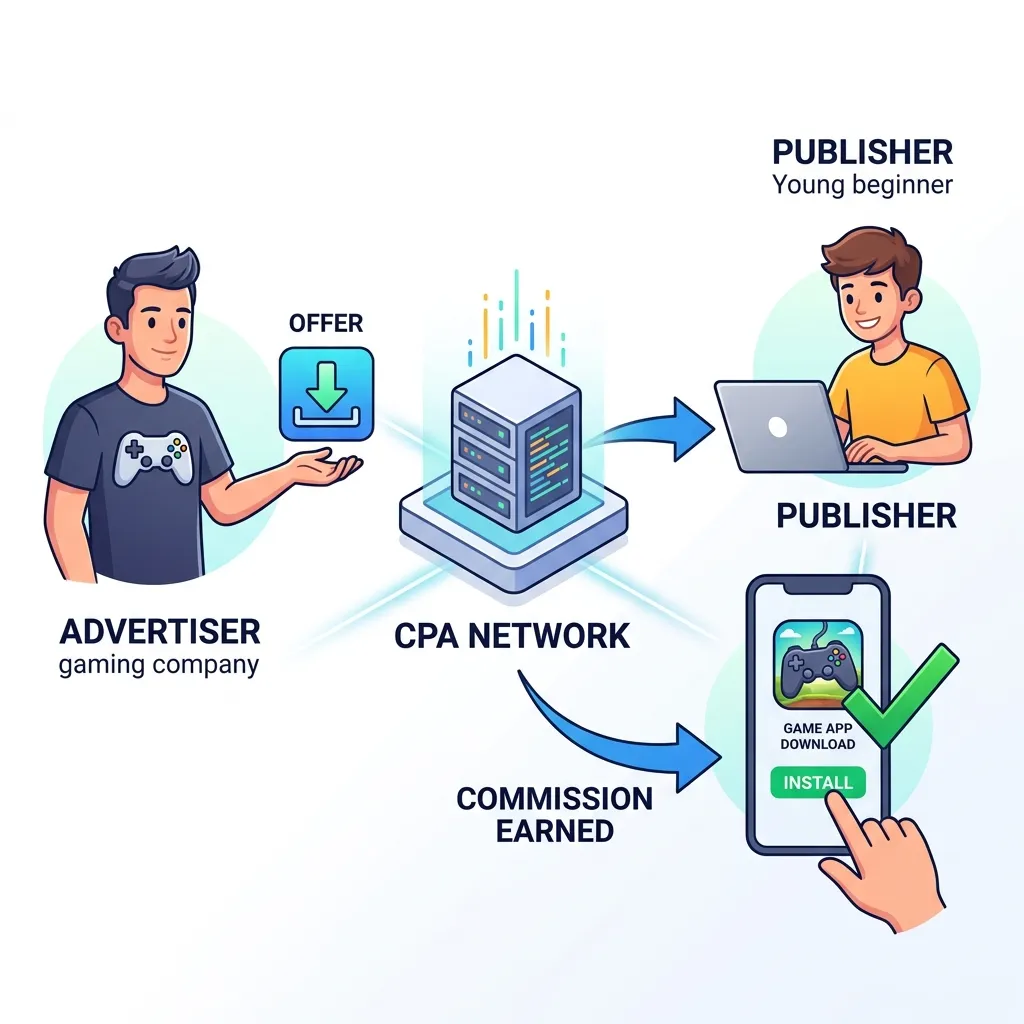
CPA marketing stands for Cost Per Action marketing. It is a highly specific branch of affiliate marketing where advertisers pay you (the affiliate) for a specified action taken by a prospective customer. Instead of pushing hard sales, your goal might simply be getting a user to sign up for a free trial, request a quote, or submit their zip code.
Why should new marketers choose the CPA model?
The primary advantage of CPA marketing for beginners is the high conversion rate associated with free or low-commitment actions. It is fundamentally easier to convince a user to enter their email address for a free gift card than it is to persuade them to purchase a $100 software subscription. Because the friction is lower, beginners can see results and gather valuable data much faster.
What key terminology do you need to know?
To navigate this industry, you need to understand the language of performance marketing.
- Affiliate (Publisher): You. The person promoting the offer to generate traffic and earn commissions.
- Advertiser (Merchant): The company creating the product or service and paying for the leads.
- Offer: The specific landing page or campaign you are promoting.
- Commission (Payout): The flat rate or percentage you earn when a user completes the required action.
- Conversion Rate (CR): The percentage of visitors who click your link and successfully complete the action.
- Return on Investment (ROI): The metric used to calculate your profitability after subtracting traffic costs.
The CPA Ecosystem: Who are the main players?
What role do affiliates play in CPA marketing?
Affiliates serve as the bridge between the product and the consumer. Your role involves identifying target audiences, purchasing or generating web traffic, and persuading that audience to click through to an advertiser’s offer. Success relies heavily on your ability to deploy proven CPA marketing strategies and optimize your campaigns based on real-time data.
Who are the advertisers and what is their goal?
Advertisers are businesses looking for leads, app installs, or sales. They rely on CPA networks to find skilled affiliates who can drive high-quality traffic. An insurance company, for example, might pay $15 for every user who fills out a quote request form. Their ultimate goal is acquiring potential customers at a profitable cost.
How do CPA networks connect affiliates and advertisers?
CPA networks act as the middlemen. They aggregate offers from hundreds of advertisers and present them to affiliates on a single platform. The network handles the tracking infrastructure, ensures advertisers pay on time, and assigns you an Affiliate Manager (AM) to help guide your campaign choices. Popular networks include MaxBounty, Perform[cb], and CPAlead.
Why are tracking solutions mandatory for your performance?
You cannot master CPA campaigns without accurate data tracking. Tracking solutions are third-party software platforms that record every click, conversion, and traffic source detail. This data tells you exactly which ads, keywords, or placements are profitable, allowing you to cut losing campaigns and scale winning ones.
Getting Started with CPA Marketing for Beginners
How do you find the right niche and profitable offers?
Selecting the right niche determines your target audience and traffic strategy. Popular CPA niches include finance, health and wellness, dating, software downloads, and sweepstakes. Start by browsing network directories to see which verticals have consistent payouts. Choose a niche that aligns with your marketing budget and existing knowledge.
How do you choose a reputable CPA network?
Not all networks accept beginners immediately, but many are welcoming if you are honest about your experience level. Look for networks with clear payment terms, a wide variety of offers, and positive reviews on industry forums. When applying, be transparent about your plans to generate traffic. Mentioning that you are studying proven CPA marketing strategies and plan to use paid search or social media can help get your account approved.
What is the process for setting up your tracking?
Once accepted into a network, you must connect your affiliate links to a tracking software like Voluum or RedTrack. This involves placing a postback URL inside your CPA network dashboard. The postback URL communicates with your tracker every time a conversion fires, allowing you to see exactly which traffic source generated the revenue.
Why is crafting effective landing pages critical?
Direct linking—sending traffic straight from an ad to the advertiser’s offer—rarely works today. Instead, you need an intermediary landing page (often called a pre-sell page). This is where business copywriting comes into play. A well-written pre-sell page warms up the visitor, explains the benefits of the offer, and builds trust before sending them to the final destination.
Implementing Proven CPA Marketing Strategies

What are the best traffic generation methods?
Traffic is the lifeblood of CPA marketing. You can categorize traffic into paid and free methods.
1. Social Media Marketing: Platforms like Facebook, Instagram, and TikTok offer highly targeted paid advertising options. You can target users based on interests, age, and behavior. However, you must adhere strictly to their advertising policies, as many CPA offers violate their terms.
2. Search Engine Marketing (SEM): Google Ads and Microsoft Advertising allow you to bid on specific keywords. This captures high-intent users actively searching for solutions.
3. Display Advertising: Buying banner space on relevant websites via native ad networks like Taboola or Outbrain works well for content-style landing pages (advertorials).
4. Content Marketing & SEO: Creating a blog or YouTube channel is a fantastic free traffic method. By ranking for targeted keywords, you can drive passive traffic to your CPA offers for months or years.
5. Email Marketing: Building a specialized email list allows you to promote multiple relevant CPA offers to the same audience over time, maximizing the lifetime value of every subscriber.
How do you optimize your CPA offers?
Optimization is the process of eliminating wasted ad spend. Once your campaign is live, your tracker will show you which devices, geographical locations, and times of day are generating conversions. If mobile users are converting but desktop users are not, you optimize the campaign by pausing desktop traffic.
Why is A/B testing essential for maximum conversions?
A/B testing involves running two variations of an ad or landing page simultaneously to see which performs better. You might test two different headlines, two distinct images, or two separate calls-to-action. Effective business copywriting heavily relies on A/B testing to determine which emotional triggers resonate best with your audience.
How do you successfully scale your campaigns?
Scaling is how you transition from making a few dollars a day to generating significant revenue. Once you find a profitable campaign, you scale by increasing your daily budget, expanding your targeting to similar demographics, or translating your landing pages to target new countries. This continuous expansion is how top affiliates eventually master CPA campaigns.
Essential Tools and Resources for Affiliate Success
Which tracking software should you use?
A robust tracker is non-negotiable in CPA marketing for beginners. Voluum, RedTrack, and Bemob are excellent options. They provide granular data on user behavior, split-testing capabilities, and automated rule-setting to protect your ROI.
How do spy tools give you a competitive advantage?
Spy tools like AdPlexity or Anstrex allow you to see exactly what ads and landing pages other affiliates are running successfully. Instead of guessing what works, you can model your campaigns after proven CPA marketing strategies already thriving in the market.
What are the best landing page builders?
You do not need to know how to code to build high-converting pre-sell pages. Drag-and-drop builders like Unbounce, Leadpages, and ClickFunnels offer pre-designed templates optimized for fast loading speeds and high conversion rates.
Where can you find reliable industry forums and communities?
CPA marketing moves incredibly fast. Joining premium forums like STM Forum or AffLift gives you access to case studies, network representatives, and experienced marketers who can answer your specific troubleshooting questions.
Common Mistakes to Avoid in Performance Marketing
Why is failing to research your niche dangerous?
Many new affiliates jump blindly into highly competitive niches like weight loss or finance without the necessary budget. Start with lower-payout, less competitive offers (like email submits or sweepstakes) to learn the mechanics of tracking and traffic generation before tackling expensive verticals.
How does ignoring data and analytics ruin campaigns?
Your opinions do not matter; only the data matters. Pausing a campaign prematurely because you “feel” it will not work, or letting a losing campaign run out of stubbornness, will drain your budget. Let your tracking software dictate your decisions.
How can you prevent overspending on traffic?
Beginners often set up an ad campaign, go to sleep, and wake up to a depleted bank account. Always set strict daily budget caps on your traffic sources. Start small—spend $10 to $20 a day to gather initial data, then optimize before increasing your spend.
Why should you avoid choosing low-quality offers?
Some offers boast massive payouts but have broken submission forms or strict restrictions that make conversions nearly impossible. Always test the offer yourself (or ask your affiliate manager) to ensure the conversion process functions smoothly before sending paid traffic to it.
Advanced Tips for Long-Term CPA Success

How does geo-targeting and demographic specificity boost ROI?
Different geographic locations yield entirely different results. Tier 1 countries (like the US, UK, and Canada) offer the highest payouts but carry the most expensive traffic costs. Many affiliates master CPA campaigns by targeting Tier 2 or Tier 3 countries where traffic is incredibly cheap, compensating for the lower offer payouts through high volume.
What are offer caps and payout negotiations?
Advertisers often limit how many conversions you can send per day—this is known as a “cap.” Pay close attention to your daily caps so you do not send free traffic to an advertiser. As you deliver consistent, high-quality leads, you can negotiate higher payouts with your affiliate manager, directly increasing your profit margins.
Why is building a relationship with your account manager crucial?
Your Affiliate Manager (AM) has access to network-wide data. They know exactly which offers are converting right now and which traffic sources are working best. Treat your AM like a business partner; ask them for recommendations and exclusive offer access.
Next Steps in Your Performance Marketing Journey
CPA marketing presents a dynamic and scalable way to build an online income stream. By mastering the terminology, carefully selecting your networks, relying heavily on data tracking, and deploying proven CPA marketing strategies, you can bypass the traditional hurdles of e-commerce and product creation.
Remember that CPA marketing for beginners requires patience and a willingness to test continuously. Very few campaigns are profitable on day one. Focus on mastering one traffic source and one niche at a time, apply strong business copywriting to your landing pages, and let data guide your scaling decisions.
Frequently Asked Questions (FAQ)
1. What is CPA marketing?
CPA marketing, or Cost Per Action marketing, is an affiliate model where advertisers pay a commission when a user completes a specific action. CPA Marketing for Beginners starts with understanding how these actions generate affiliate income.
2. Is CPA marketing suitable for beginners?
Yes. CPA Marketing for Beginners is highly accessible because you do not have to convince users to buy a product. Instead, you earn commissions when they complete simple actions such as sign-ups or app downloads.
3. How much money can I make with CPA marketing?
Earnings vary based on your budget, traffic source, and experience. With CPA Marketing for Beginners, many people start with small daily earnings before scaling profitable campaigns.
4. What are the best CPA networks for beginners?
Networks like MaxBounty, Perform[cb], CPAlead, and MyLead are popular choices for CPA Marketing for Beginners because they offer beginner-friendly offers and helpful affiliate managers.
5. Do I need a website for CPA marketing?
While a full website is not always required, CPA Marketing for Beginners usually works better with a simple landing page that improves trust and conversion rates.
6. How do I get traffic to my CPA offers?
You can use paid traffic sources such as Facebook Ads, Google Ads, native ads, and push notifications, or free methods like SEO, YouTube, and social media. These are common traffic methods in CPA Marketing for Beginners.
7. What is an offer in CPA marketing?
An offer is the campaign provided by an advertiser that specifies the required action, payout, and rules. Understanding offers is a key part of CPA Marketing for Beginners.
8. How long does it take to see results in CPA marketing?
Paid campaigns may generate data within hours, while SEO traffic can take months. Success in CPA Marketing for Beginners depends on testing, optimization, and consistency.
9. What are common mistakes to avoid?
Common mistakes include direct linking, poor tracking, overspending before optimization, and changing niches too often. Avoiding these mistakes is essential in CPA Marketing for Beginners.
10. What is Business Copywriting’s role in CPA?
Business copywriting helps create persuasive landing pages and ads that increase clicks and conversions. It is an important skill for CPA Marketing for Beginners.
11. How can I Master CPA Campaigns?
You can master campaigns by tracking performance, running A/B tests, working with affiliate managers, and scaling profitable campaigns. These are core principles of CPA Marketing for Beginners.
12. Where can I find more Proven CPA Marketing Strategies?
You can learn more through affiliate forums, network blogs, spy tools, and trusted industry tutorials. Continuous learning is essential for long-term success in CPA Marketing for Beginners.


Leave a Reply