

CPA marketing (Cost Per Action) is a performance-based affiliate model where marketers earn commissions when users complete specific actions—like filling out a form or making a purchase. This guide covers everything from picking profitable CPA offers and mastering CPA traffic sources to tracking conversions and scaling campaigns for maximum profit.
CPA marketing has quietly become one of the most accessible and scalable income models in digital marketing. Unlike traditional advertising—where you pay for clicks or impressions and hope for results—CPA marketing flips the equation. You only earn when something measurable happens. A lead submitted. A sale made. A download completed.
That simple shift in accountability is what makes CPA marketing so attractive. Advertisers love it because they pay for results. Affiliates love it because the barrier to entry is relatively low, and the upside can be significant. It’s a model built on performance, and for those who learn to navigate it well, it can be extraordinarily profitable.
But “learning to navigate it well” is the operative phrase. CPA marketing rewards those who understand offer selection, traffic sources, tracking infrastructure, and data-driven optimization. Without a solid grasp of these fundamentals, even a promising campaign can bleed budget fast.
This guide is designed to be your definitive resource—whether you’re exploring CPA marketing for beginners or looking to sharpen advanced scaling strategies. We’ll walk through every layer of the model: how to find and choose the right offers, which CPA traffic sources deliver the best ROI, how tracking tools and postback URLs work, and how to scale campaigns without losing profitability. By the end, you’ll have a clear, actionable framework for building CPA campaigns that convert.
What Is CPA Marketing?
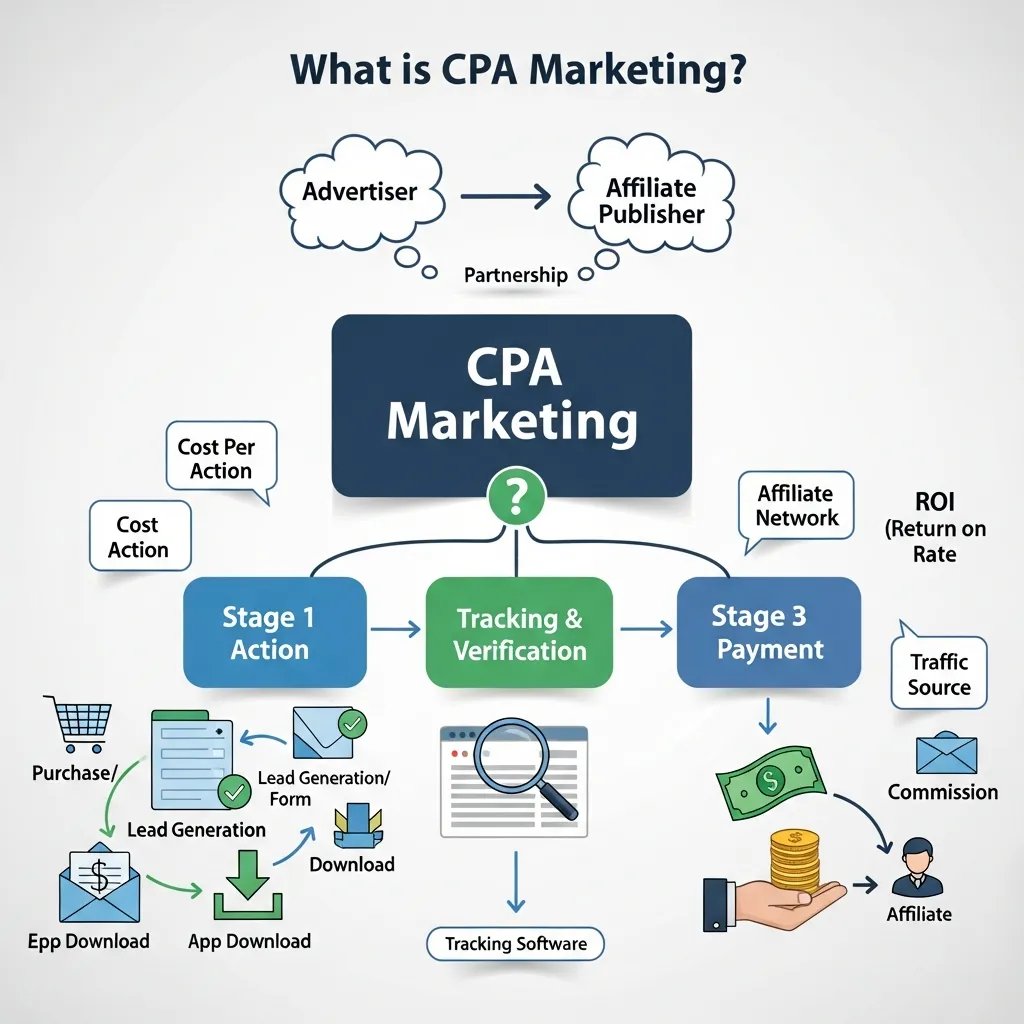
CPA marketing, or Cost Per Action marketing, is a branch of affiliate marketing where an affiliate earns a commission each time a referred user completes a predefined action. That action might be a form submission, a free trial signup, an app download, a purchase, or even just an email registration—depending on the advertiser’s campaign goals.
The CPA model sits within the broader affiliate marketing ecosystem but stands apart because of its performance-based structure. Advertisers set the action they want, define the payout, and only pay when that action is confirmed. For affiliates, this means earnings are tied directly to results—not to how many people saw an ad.
How does CPA marketing work? Here’s the basic flow:
- An affiliate joins a CPA network (like MaxBounty, ClickDealer, or CrakRevenue).
- The affiliate selects an offer—say, a $4 payout for every email signup on a financial services landing page.
- The affiliate drives traffic to a unique tracking link provided by the network.
- When a user completes the required action, the conversion is recorded and the affiliate receives their commission.
The tracking layer—usually powered by postback URLs and third-party tools—is what makes this whole system auditable and scalable. More on that shortly.
Why Choose CPA Marketing?
Several factors make CPA marketing particularly compelling compared to other monetization models:
- Low barrier to entry. You don’t need a product, inventory, or customer support team. Your job is to drive traffic and match the right audience to the right offer.
- Diverse payout structures. CPA offers range from $0.50 for simple app installs to $200+ for insurance or finance leads. There’s a campaign type for nearly every skill level and budget.
- Scalability. Once a campaign is profitable, scaling is largely a matter of increasing ad spend or expanding to new traffic sources—without redesigning the core offer.
- Fast feedback loops. Unlike SEO or content marketing, paid CPA campaigns can generate data within hours, allowing rapid testing and iteration.
For marketers comfortable with data, paid traffic, and testing, CPA marketing offers one of the clearest paths from effort to measurable return.
Understanding CPA Offers: How to Find and Choose the Right One
Not all CPA offers are created equal. The offer you choose will have a direct impact on your conversion rates, your traffic costs, and ultimately your profitability. This section functions as your cluster guide to offer research and selection.
How to Find the Best CPA Offers
The starting point is joining reputable CPA networks. Some of the most established networks include:
- MaxBounty – strong in finance, health, and lead gen
- ClickDealer – popular for e-commerce and mobile offers
- CrakRevenue – dominant in adult and dating verticals
- PeerFly (now largely archived) and Perform[cb] – known for compliance and quality
Most networks provide internal offer directories sortable by niche, payout, EPC (earnings per click), and conversion rate. Tools like OfferVault and oDigger aggregate offers across multiple networks, making it easier to compare payouts and terms side by side.
Key Factors in Choosing a Profitable CPA Offer
When evaluating offers, focus on:
- EPC (Earnings Per Click): A high EPC suggests the offer converts well relative to traffic cost. Use it as a benchmark, not a guarantee.
- Conversion rate: Simpler actions (email submits, zip submits) convert at higher rates but pay less. Purchase-based offers pay more but convert less frequently.
- Geo restrictions: Some offers only accept traffic from specific countries. Sending mismatched traffic wastes budget.
- Traffic source restrictions: Many offers prohibit certain traffic types (e.g., incentivized traffic or specific ad platforms). Violating these terms can result in withheld commissions.
- Landing page quality: If the advertiser’s landing page is weak, your conversion rate suffers regardless of traffic quality.
Best CPA Niches for Beginners
For those new to CPA marketing, some niches consistently deliver accessible entry points and solid conversion rates:
- Email/zip submits: Low-friction offers ideal for testing traffic sources
- Health and wellness: Weight loss, supplements, and fitness offers maintain evergreen demand
- Finance and insurance: Higher payouts (often $10–$50+ per lead), though more competitive
- Mobile apps and gaming: Strong conversion rates, especially with mobile traffic
- Education and e-learning: Growing demand post-pandemic, with solid lead-gen payouts
Beginners should start with simpler conversion actions (lead gen rather than sales) to keep testing costs manageable while learning traffic and tracking fundamentals.
CPA Traffic Sources: A Deep Dive
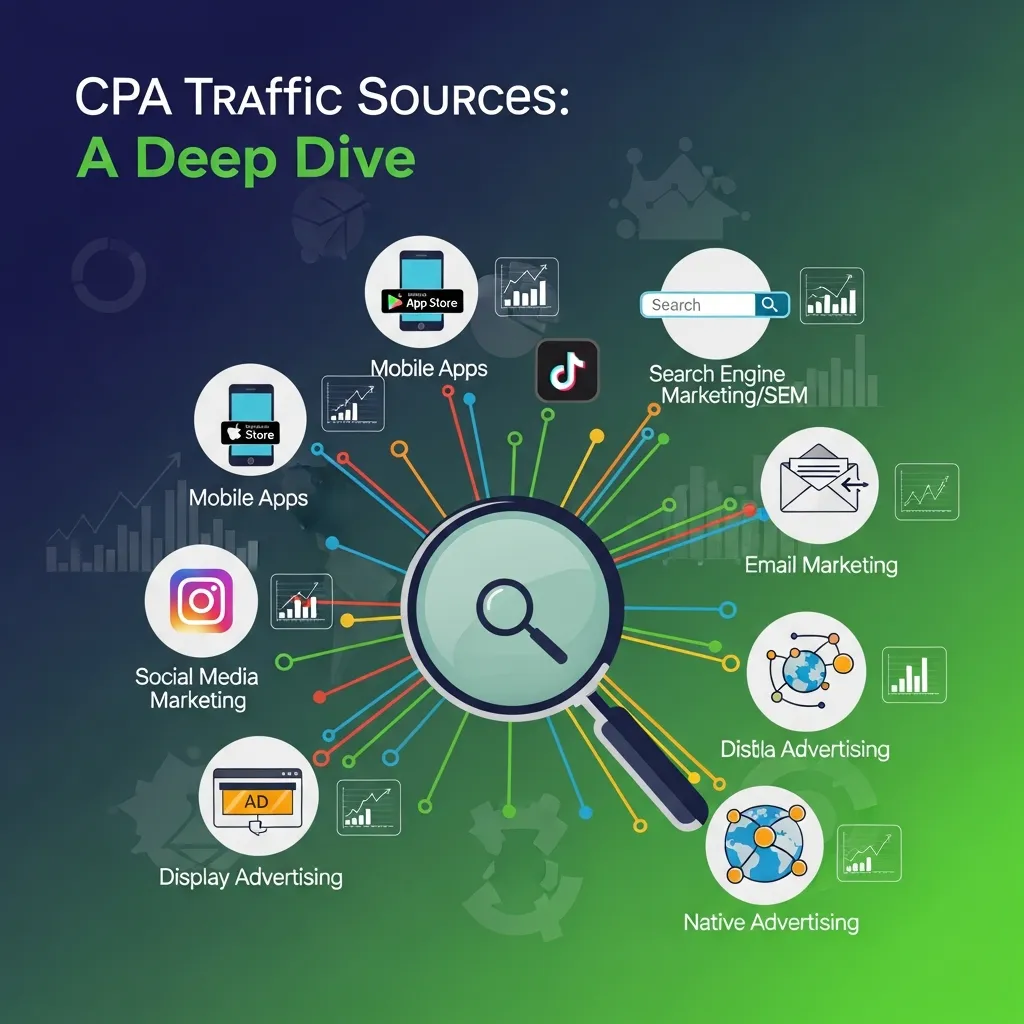
Traffic is the lifeblood of any CPA campaign. Choosing the right CPA traffic source—and understanding how to use it effectively—is often the difference between a profitable campaign and one that burns budget. This cluster covers the most important traffic channels in detail.
Best CPA Traffic Sources for Beginners
If you’re just starting out, not all traffic sources are equally forgiving. The best CPA traffic sources for beginners combine accessible entry costs, readable data, and enough volume to test offers meaningfully. The top options include:
- Google Ads – high intent, precise targeting, but requires compliance with ad policies
- Facebook Ads – broad reach, demographic targeting, strong for lead gen
- Native ads – lower friction, works well for content-driven offers
- Push traffic – low cost, high volume, effective for certain offer types
- Bing Ads – often overlooked, but less competitive and cheaper than Google
CPA Marketing with Google Ads
Google Ads is one of the most powerful CPA traffic sources for marketers who understand intent-based targeting. Users searching specific keywords signal high commercial intent—making them valuable for finance, health, and e-commerce offers.
Key considerations for CPA marketing with Google Ads:
- Use Search campaigns for high-intent keywords (e.g., “best car insurance quotes”)
- Use Display campaigns for retargeting or awareness-stage offers
- Ensure your landing page complies with Google’s policies—CPA offers promoting certain health claims or financial products face stricter scrutiny
- Monitor your Quality Score closely, as it directly affects CPC and ad placement
- Always use conversion tracking—import postback data or use Google Tag Manager to measure actual CPA conversions
Google Ads rewards relevance. Tightly aligned ad copy, landing pages, and offer types consistently outperform broad, scattered campaigns.
CPA Marketing with Facebook Ads
Facebook Ads (including Instagram placements via Meta’s ad platform) remains one of the most versatile CPA traffic sources. Its targeting capabilities—based on interests, behaviors, life events, and lookalike audiences—make it especially powerful for lead generation campaigns.
CPA marketing with Facebook Ads works best when:
- Your offer is visually engaging and has broad consumer appeal
- You’re running lead gen campaigns using Facebook’s native Lead Ads format (which keeps users on-platform)
- You use Lookalike Audiences built from existing converters to expand reach while maintaining audience quality
- You test multiple creatives (images, video, carousel) simultaneously using Facebook’s A/B testing tools
- You track conversions via the Meta Pixel and connect it with your CPA tracking tool for full attribution
One challenge: Facebook has strict advertising policies around certain CPA niches, including weight loss, financial products, and relationship offers. Always review Meta’s ad policies before building campaigns in sensitive verticals.
Native Ads for CPA Marketing
Native advertising involves placing ads that blend visually with editorial content—appearing on news sites, blogs, and media publications rather than in search results or social feeds. Platforms like Taboola, Outbrain, and MGID are the major players.
Native ads for CPA marketing work particularly well for:
- Advertorial-style funnels where the ad leads to an article or pre-sell page before the offer
- Health, finance, and lifestyle niches that benefit from a storytelling-based approach
- Retargeting campaigns where audiences have already expressed interest
The click-through rates on native are typically lower than search or social, but the lower CPCs and softer “sales pitch” environment can produce strong ROI when the funnel is optimized correctly.
Push Traffic for CPA Offers
Push traffic involves sending notification-style ads to users who have opted in to receive browser or app notifications. Platforms like PropellerAds, RichPush, and Zeropark power push traffic networks.
Push traffic for CPA offers has several distinct advantages:
- Low cost per click, often $0.01–$0.10 depending on geo and vertical
- High volume, especially in Tier 2 and Tier 3 countries
- Direct delivery to a user’s screen, bypassing ad blockers
Push traffic converts well for sweepstakes, downloads, mobile app installs, and gaming offers. It tends to underperform for high-consideration purchases. Because push audiences have opted in at some point, they’re technically warm—but their intent at the moment of notification can vary widely. Strong creative and a compelling pre-lander are essential.
Other Emerging CPA Traffic Sources
Beyond the major platforms, several other channels are worth monitoring:
- TikTok Ads: Rapidly growing, especially effective for younger demographics and e-commerce-adjacent offers
- YouTube Ads: Strong for video-native verticals; cost per conversion can be competitive for the right offers
- Reddit Ads: Niche community targeting; works well for tech, finance, and gaming verticals
- Email traffic: Solo ads and email list rentals remain viable for certain lead-gen offers, though quality control is critical
Diversifying across multiple CPA traffic sources protects your campaigns from platform policy changes and keeps your cost-per-acquisition competitive.
Tracking and Optimization in CPA Marketing
Running CPA campaigns without proper tracking is like driving at night without headlights. You might move forward, but you have no idea what’s ahead—or what’s costing you money. This section covers the infrastructure every affiliate needs.
How to Track CPA Conversions
Tracking CPA conversions requires connecting your traffic source, your landing page, and the CPA network’s conversion data into a single, readable data flow. The standard method uses unique click IDs passed through tracking URLs, combined with postback URLs that send conversion signals back to your tracking tool.
A basic tracking setup involves:
- A tracking platform (e.g., Voluum, RedTrack, Bemob) that generates unique tracking links
- A traffic source that appends click parameters (e.g.,
{clickid}) to each visit - A CPA network that fires a postback URL when a conversion occurs, passing the click ID back to your tracker
- Your tracker records the conversion, matches it to the original click, and attributes it to the correct ad, keyword, or creative
This closed-loop attribution lets you see exactly which traffic segments are generating conversions—and which are wasting spend.
What Is a Postback URL in CPA Marketing and Why Does It Matter?
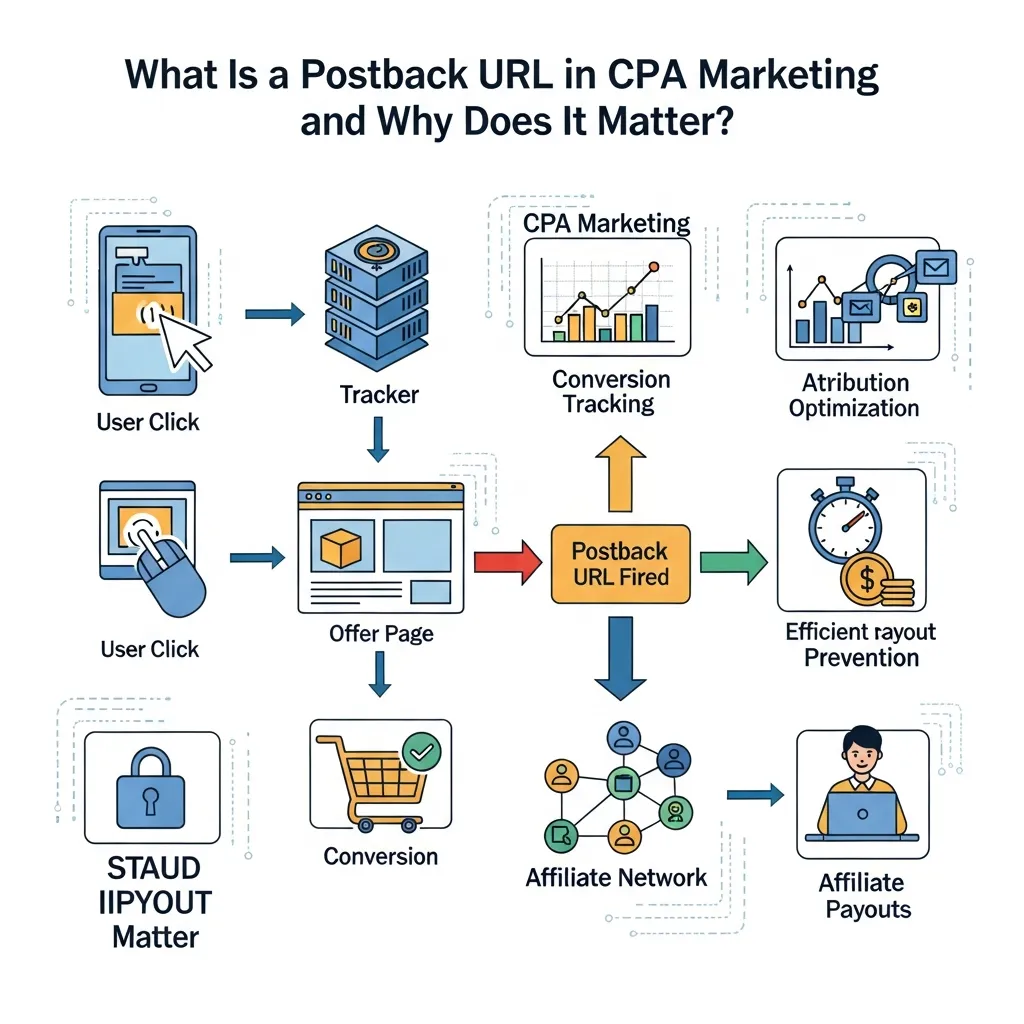
A postback URL (also called a server-to-server or S2S pixel) is a URL fired by the CPA network’s server when a conversion is confirmed. Unlike browser-based pixels, postback URLs don’t rely on cookies or JavaScript—making them far more accurate, especially on mobile devices.
How postback URLs work in CPA marketing:
- A user clicks your tracking link; your tracker assigns a unique click ID (e.g.,
abc123) - That click ID is passed to the CPA network’s tracking system
- When the user converts, the network fires your postback URL:
https://yourtracker.com/postback?clickid=abc123&payout=5.00 - Your tracker receives the signal, records the conversion, and attributes the $5.00 payout to the originating click
Without a properly configured postback URL, conversion data is incomplete or delayed—making optimization nearly impossible. Setting this up correctly should be the first technical step in any campaign launch.
Best CPA Tracking Tools for Affiliates
Several tracking platforms are widely used in the affiliate marketing industry:
|
Tool |
Best For |
Pricing Model |
|---|---|---|
|
Voluum |
Experienced affiliates, advanced analytics |
Subscription |
|
RedTrack |
Agencies and teams, API integrations |
Subscription |
|
Bemob |
Beginners, free tier available |
Freemium |
|
Binom |
Self-hosted, high-volume campaigns |
One-time license |
|
CPV Lab Pro |
Self-hosted, privacy-focused affiliates |
One-time license |
For CPA marketing beginners, Bemob offers a functional free tier that covers the basics without upfront cost. As campaign volume grows, upgrading to Voluum or RedTrack provides deeper analytics and automation features.
Analyzing Data for Campaign Optimization
Raw conversion data is only useful if you act on it. The key metrics to monitor in any CPA campaign:
- CTR (Click-Through Rate): Low CTR on ads signals weak creative or poor audience targeting
- LP CTR (Landing Page Click-Through Rate): If users land but don’t click through to the offer, the pre-lander needs work
- Conversion Rate: Tracks how many offer page visitors complete the target action
- EPC (Earnings Per Click): Total earnings divided by total clicks; your benchmark for traffic source profitability
- ROI: The ultimate measure—total revenue minus total spend, divided by total spend
Segment your data by traffic source, ad creative, geo, device type, and time of day. Patterns emerge quickly. A campaign might be breakeven overall but highly profitable on mobile between 6pm–10pm in one specific country. That’s your signal to scale that segment and cut the rest.
Scaling Your CPA Campaigns
Once a campaign reaches consistent profitability—typically defined as a positive ROI over at least 7–14 days of data—scaling becomes the priority. Scaling CPA campaigns isn’t just about increasing budget. Done wrong, it disrupts the conditions that made the campaign profitable in the first place.
Strategies for Scaling CPA Campaigns
Vertical scaling means increasing your budget on the existing campaign. Most ad platforms allow you to raise daily spend in increments (typically 20–30% every 48–72 hours) without significantly disrupting the algorithm’s optimization phase.
Horizontal scaling means replicating the campaign across new audiences, geos, ad creatives, or traffic sources. This is often more sustainable than vertical scaling alone because it diversifies your risk.
Proven horizontal scaling approaches include:
- Expanding to new geographic markets (Tier 2 or Tier 3 countries with lower CPCs)
- Duplicating winning campaigns on secondary traffic sources
- Creating new ad creative variations targeting different audience segments
- Testing the same offer across multiple CPA networks to compare conversion rates
When and How to Scale Effectively
Scale when:
- ROI is consistently positive over a meaningful data window (not just one good day)
- Conversion volume is high enough to be statistically significant (minimum 30–50 conversions)
- Your tracking is clean and attribution is confirmed accurate
Don’t scale when:
- Performance is inconsistent or driven by a single traffic segment
- You haven’t yet identified which variables are responsible for profitability
- Your landing page or offer hasn’t been split tested
Avoiding Common Scaling Pitfalls
Budget shock: Doubling spend overnight can destabilize platform algorithms, inflating CPCs and disrupting audience delivery. Scale incrementally.
Creative fatigue: High-volume campaigns burn through ad creative faster. Build a creative pipeline before scaling so you’re never waiting on new assets.
Geo performance drift: A campaign profitable in the US may perform very differently in the UK or Australia. Always localize creatives and landing pages when expanding to new markets.
Neglecting tracking during scale: Increased volume amplifies any tracking gaps. Before scaling, audit your postback URL configuration and verify that conversion data is flowing accurately.
Advanced CPA Marketing Techniques
Once you’ve mastered the fundamentals, these advanced strategies can push campaign performance significantly further.
A/B Testing Strategies for CPA Campaigns
Effective A/B testing isolates one variable at a time—whether that’s a headline, image, call-to-action, or landing page layout. Running multi-variable tests simultaneously makes it impossible to determine which element drove the change.
A disciplined testing framework:
- Define the hypothesis (“Changing the CTA from ‘Learn More’ to ‘Claim Your Offer’ will increase LP CTR”)
- Run both variants simultaneously with equal traffic splits
- Wait for statistical significance before declaring a winner (aim for 95% confidence)
- Implement the winner and begin the next test
Systematic A/B testing compounds over time. Marginal improvements to CTR, LP CTR, and conversion rate can collectively double campaign profitability.
Landing Page Optimization for CPA Offers
Your landing page—often called a pre-lander in CPA marketing—bridges the gap between an ad and the offer. A strong pre-lander warms up the user, qualifies intent, and meaningfully increases conversion rates on the offer page.
High-converting CPA landing pages share common characteristics:
- Message match: The headline mirrors the ad’s promise, reducing cognitive dissonance
- Single clear CTA: One action, one button, one direction
- Social proof: Testimonials, trust badges, and real results reduce friction
- Fast load speed: Pages loading in over 3 seconds lose a significant portion of mobile visitors
- Mobile-first design: The majority of CPA traffic is now mobile; design for smaller screens first
Tools like Unbounce, Landingi, and LeadPages simplify landing page creation without requiring development resources. For affiliates running high volumes, custom-coded pages built on lightweight frameworks (like HTML/CSS with minimal JavaScript) often outperform drag-and-drop builders on load speed.
Ad Copy and Creative Best Practices
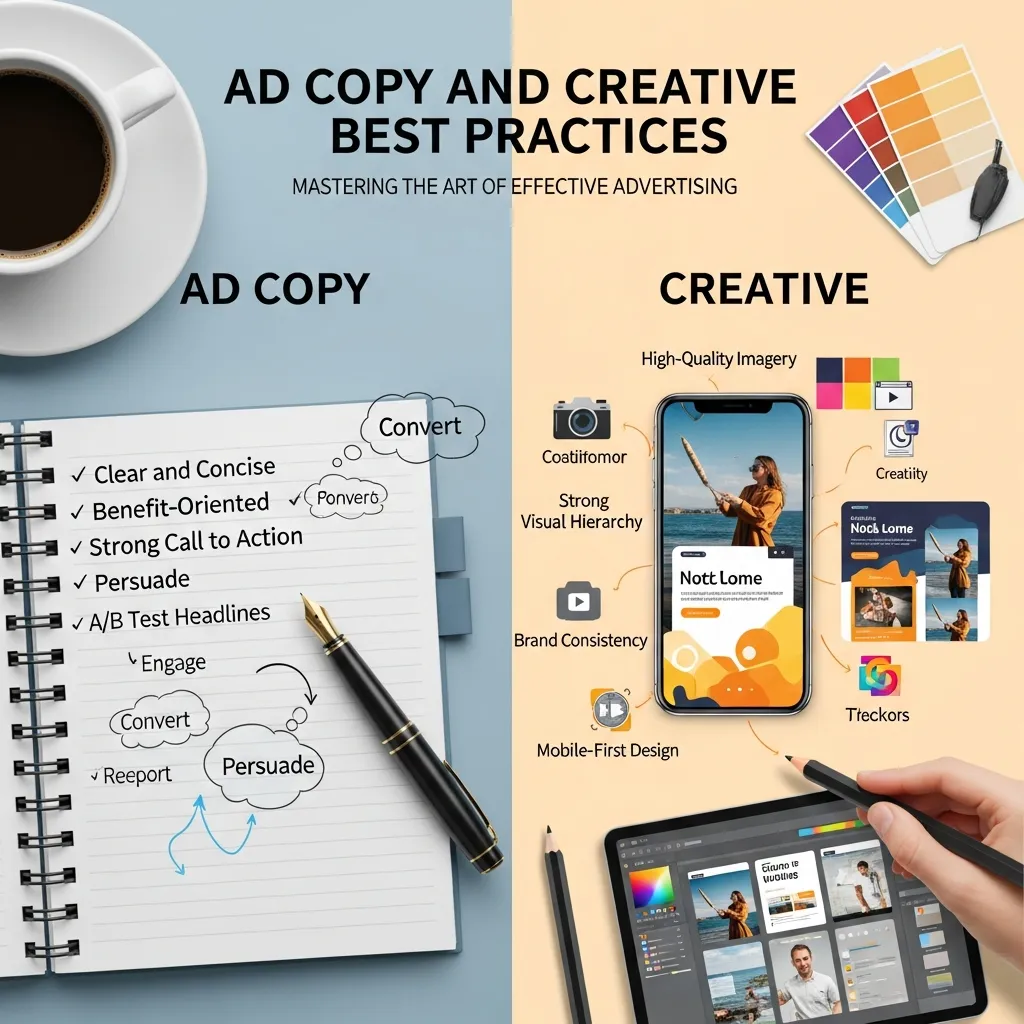
Ad creative is your first impression—and in most cases, it determines whether someone clicks at all. For CPA campaigns, effective creative:
- Speaks directly to a pain point or desire (“Paying too much for car insurance?”)
- Creates urgency or scarcity when authentic (“Offer ends Friday”)
- Uses numbers and specifics (“Save $400/year on your policy”)
- Matches the visual style of the platform (native ads should look editorial; push notifications should be concise and direct)
Video creative consistently outperforms static images on Facebook and TikTok for most verticals. Even simple 15–30 second videos with a clear narrative arc tend to generate stronger engagement and lower CPCs than image-only formats.
Conclusion
CPA marketing rewards those who treat it as a system, not a shortcut. The fundamentals—finding the right offer, choosing the right CPA traffic sources, building accurate tracking, and scaling with discipline—are interconnected. Weakness in any one area limits what the others can achieve.
For beginners, the most important step is to start simple: pick one niche, one traffic source, and one offer. Learn how the data flows. Understand what your postback URL is telling you. Build your first optimization cycle. The sophistication comes later, built on a foundation of real campaign experience.
For more experienced affiliates, the ceiling in CPA marketing is largely self-imposed. Campaigns that convert well at $100/day can often scale to $1,000/day or beyond with systematic horizontal expansion and disciplined creative refreshing.
The model works. The question is whether you’re willing to build the infrastructure—tracking, testing, and optimization—that makes it work consistently. Start with one campaign, follow the data, and let the results guide every decision from there.
Frequently Asked Questions
What is CPA marketing?
CPA marketing (Cost Per Action marketing) is a performance-based affiliate model where affiliates earn a commission each time a referred user completes a specific action—such as submitting an email, signing up for a free trial, or making a purchase. Advertisers only pay when the defined action occurs, making it a low-risk model for brands and a results-driven opportunity for affiliates.
How does CPA marketing work?
An affiliate joins a CPA network, selects an offer with a defined payout per action, and drives traffic through a unique tracking link. When a user clicks the link and completes the required action, the CPA network records the conversion via a postback URL and credits the affiliate’s account with the agreed commission.
Is CPA marketing profitable for beginners?
Yes—CPA marketing can be profitable for beginners, particularly when starting with low-complexity offers (like email submits or app downloads) and low-cost traffic sources. Profitability depends on how quickly a beginner learns to track data, optimize campaigns, and avoid common mistakes like mismatched traffic or ignoring offer restrictions.
What are the best CPA networks to join?
The most reputable CPA networks include MaxBounty, ClickDealer, CrakRevenue, Perform[cb], and Admitad. The best network for any individual affiliate depends on their niche, geographic focus, and preferred traffic types. Most experienced affiliates work with two or three networks simultaneously to access a wider range of offers.
How much money can you make with CPA marketing?
Earnings vary widely based on traffic volume, offer type, and campaign optimization. Beginner affiliates might earn a few hundred dollars per month in their first campaigns. Experienced affiliates running multiple optimized campaigns across paid traffic sources can generate five to six figures per month. CPA marketing income scales with budget, skill, and the quality of tracking infrastructure.
What are the main challenges in CPA marketing?
The main challenges include managing ad spend before a campaign becomes profitable, navigating platform advertising policies, finding offers that align with available traffic, accurately tracking conversions across devices, and avoiding fraud or non-compliant traffic. Staying current with network policy changes and traffic platform algorithm updates also requires consistent attention.
What are the best traffic sources for CPA offers?
The best CPA traffic sources depend on the offer type. Google Ads works well for high-intent, search-driven offers. Facebook Ads excels at lead generation with demographic targeting. Native ads suit advertorial-style funnels. Push traffic delivers high volume at low cost for sweepstakes and app offers. For beginners, Facebook Ads and native advertising tend to offer the most accessible learning curve.
How do I track my CPA conversions accurately?
Accurate CPA conversion tracking requires a dedicated tracking platform (such as Voluum, RedTrack, or Bemob), properly configured postback URLs from the CPA network, and unique click IDs passed through your tracking links. Every conversion should be attributed back to its originating click, creative, and traffic segment. Verifying that your postback is firing correctly before scaling is essential.
What is a postback URL and why is it important in CPA marketing?
A postback URL is a server-to-server signal that a CPA network fires when a conversion is confirmed. Unlike browser pixels, postback URLs don’t rely on cookies or JavaScript, making them more accurate—especially on mobile. Without a working postback URL, conversion data is incomplete, which makes campaign optimization unreliable and scaling risky.
How can I scale my CPA campaigns for higher profits?
Scale CPA campaigns by first confirming consistent profitability over a meaningful data window (7–14 days minimum). Use vertical scaling (increasing budget incrementally on existing campaigns) and horizontal scaling (expanding to new geos, audiences, or traffic sources). Always maintain fresh creative inventory and verify tracking accuracy before increasing spend significantly.
What are some common mistakes to avoid in CPA marketing?
Common mistakes include: scaling campaigns before sufficient conversion data exists, ignoring offer traffic restrictions, running campaigns without proper postback URL configuration, neglecting landing page optimization, and testing too many variables simultaneously. Sending mismatched traffic (e.g., desktop traffic to mobile-only offers) and failing to monitor creative fatigue during scale are also frequent and costly errors.
How do I choose the best CPA offers for my audience?
Match offers to your traffic source’s audience intent and demographic profile. Evaluate each offer’s EPC, conversion rate, geo restrictions, and traffic source compatibility. Start with simpler conversion actions (lead gen vs. sales) to reduce friction. Use tools like OfferVault to compare payouts across networks, and always review the advertiser’s landing page for quality before directing traffic to it.


Leave a Reply