

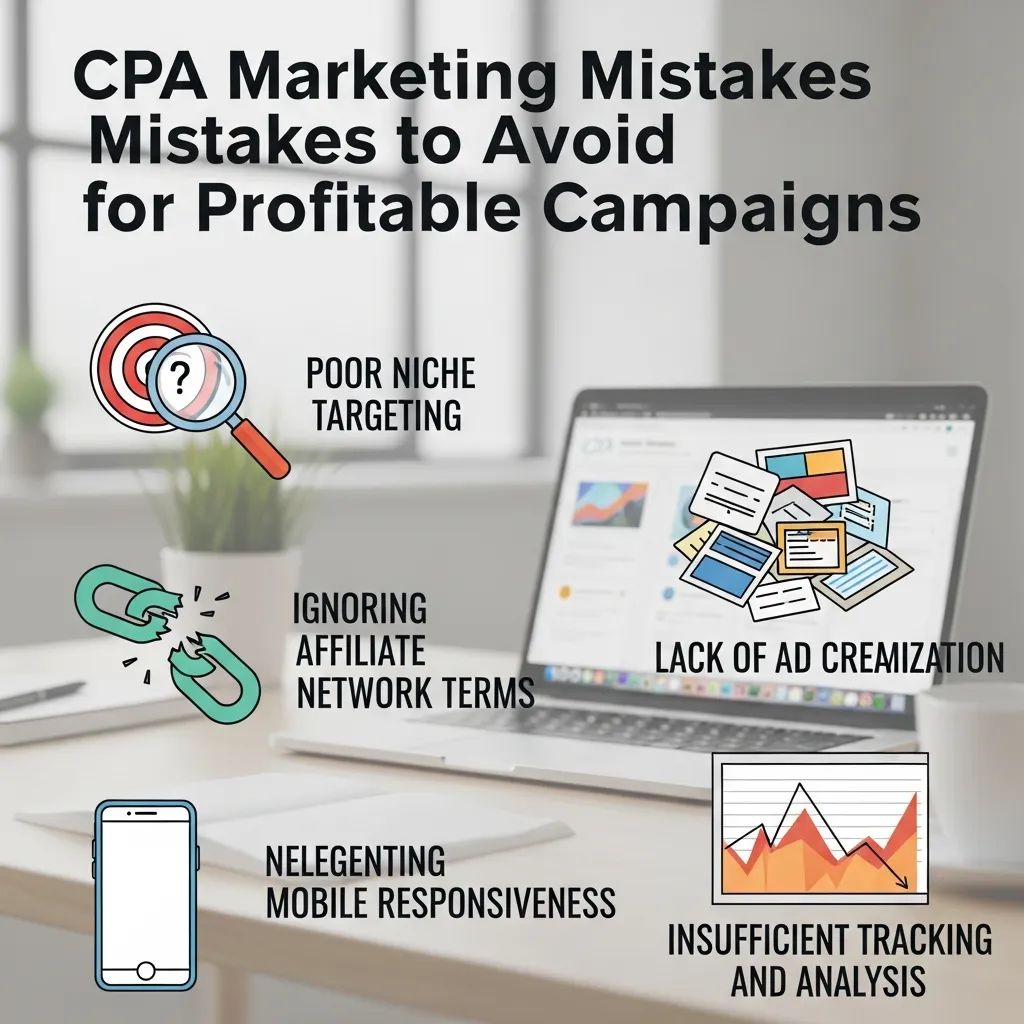
The most costly CPA Marketing Mistakes to Avoid include skipping niche research, picking low-quality offers, neglecting landing page optimization, ignoring traffic source quality, and scaling too fast without data. Fix these, and you set the foundation for profitable, sustainable campaigns.
CPA (Cost Per Action) marketing rewards you when a user completes a specific action—signing up, downloading an app, or making a purchase. It’s one of the most accessible ways to earn online because you don’t always need a product of your own. But accessibility cuts both ways. The low barrier to entry means plenty of marketers jump in, burn their budgets, and quit before they ever turn a profit.
The good news? Most failures trace back to a handful of avoidable errors. Once you know what they are, you can sidestep them and keep your campaigns in the black.
This guide breaks down the most common CPA Marketing Mistakes to Avoid, along with practical fixes for each. You’ll also find advanced strategies to protect your campaigns and a detailed FAQ that answers the questions beginners ask most. Let’s get into it.
What is CPA marketing, and why do mistakes matter?
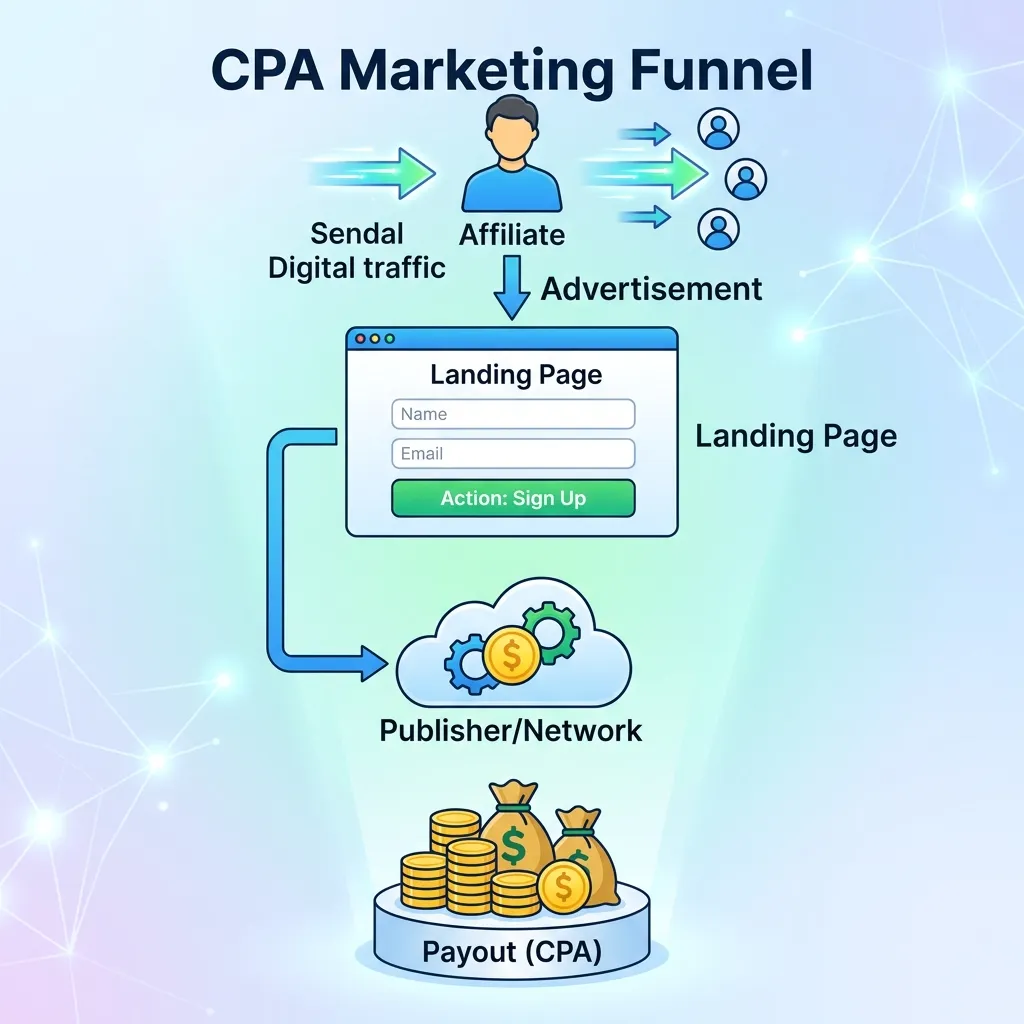
CPA marketing is a performance-based model where advertisers pay affiliates for a completed action rather than a click or impression. You partner with a CPA network, choose offers, drive traffic to them, and earn a commission each time your audience converts.
Because you pay for traffic upfront and only earn when conversions happen, small errors compound quickly. A poorly chosen offer or a leaky landing page can drain your ad spend in hours. Avoiding common Affiliate Marketing Mistakes isn’t just good practice—it’s the difference between a campaign that scales and one that bleeds money. Below, we cover each pitfall and how to dodge it.
What CPA marketing mistakes should you avoid?
Why is niche research the foundation of CPA success?
Jumping into a niche because it “looks profitable” is one of the fastest ways to waste money. Without research, you’re guessing.
Start by identifying niches with proven demand and reasonable competition. Health, finance, dating, gaming, and software tend to perform well, but profitability depends on how well you understand the audience. Use tools like Google Trends, keyword planners, and network-reported earnings per click (EPC) to gauge demand.
Then analyze your target audience. Ask who they are, what problem they want solved, and what motivates them to act. The better you map their pain points, the easier it becomes to match them with offers they’ll actually convert on.
How does poor offer selection hurt your campaigns?
Not all offers are created equal. Low-quality offers—those with confusing flows, low payouts, or shady advertisers—will tank your conversion rate no matter how good your traffic is.
To find High Converting CPA Offers, look at these signals:
- EPC (earnings per click): A higher network EPC suggests the offer converts reliably for other affiliates.
- Conversion flow: Simple actions (email submits, short forms) usually convert better than complex ones (credit card trials).
- Payout vs. effort: Balance the commission against how hard the action is to complete.
- Advertiser reputation: Stick with offers from advertisers known to pay on time and approve leads fairly.
Ask your account manager which offers are trending. Networks track this data and often share it with active affiliates.
Why does landing page design make or break conversions?
Sending traffic straight to an offer page often leaves money on the table. A dedicated landing page warms up visitors and pre-sells the action, which is why CPA Landing Page Optimization matters so much.
A high-converting landing page usually includes:
- A clear, benefit-driven headline that matches your ad’s promise.
- A single, focused call to action—don’t give visitors competing choices.
- Fast load times, since every extra second of load time drops conversions.
- Mobile-first design, because most CPA traffic comes from phones.
- Trust signals like testimonials, security badges, or simple, honest copy.
Strong CPA Landing Page Optimization keeps your message consistent from ad to action, reducing the friction that causes visitors to bounce.
How do you avoid low-quality and fraudulent traffic?
Cheap traffic is rarely a bargain. Bot clicks, incentivized traffic, and click farms inflate your numbers while delivering zero real conversions.
Watch for warning signs like extremely high click volumes with near-zero conversions, traffic from unexpected countries, and suspiciously short session times. These often point to fraudulent or low-quality sources.
Focus on legitimate channels instead—paid search, native ads, properly vetted push traffic, and reputable social platforms. Quality traffic costs more per click, but it converts, which is what actually matters to your bottom line.
Why is tracking and analytics non-negotiable?
Running campaigns without tracking is like driving blindfolded. If you can’t see which keyword, ad, or placement drives conversions, you can’t optimize.
Set up a tracking solution (such as Voluum, RedTrack, or Binom) before you spend a dollar. Use unique tracking links for each traffic source and creative so you know exactly what’s working.
Once data starts flowing, interpret it for optimization. Pause underperforming placements, shift budget toward winning angles, and watch metrics like conversion rate, cost per acquisition, and return on ad spend. Data turns guesswork into decisions.
What compliance and regulations should you respect?
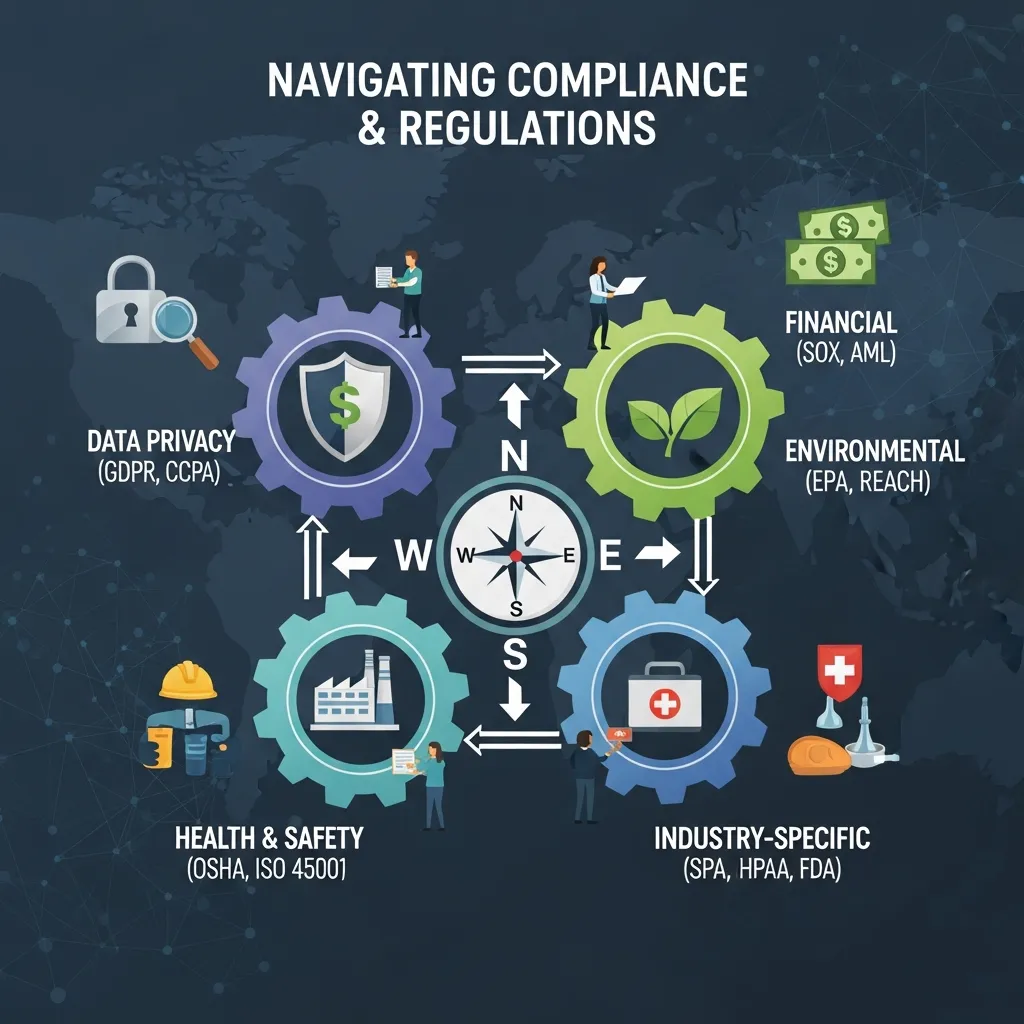
Ignoring rules can get your accounts banned and your earnings frozen. Each traffic platform—Google, Facebook, TikTok—has strict advertising policies, and CPA offers often live in sensitive categories.
Read and follow platform policies before you launch. Avoid misleading claims, banned content, and cloaking. On the legal side, respect data privacy laws like GDPR and CCPA, disclose affiliate relationships where required, and stay clear of offers that promise unrealistic results. Compliance protects both your reputation and your revenue.
What are the risks of scaling too quickly?
Premature scaling is a classic killer. A campaign that profits at $50 a day won’t automatically profit at $500 a day—audiences saturate, costs rise, and what worked on a small scale can collapse.
Scale with data, not emotion. Increase budgets gradually (10–20% at a time), expand into new but related audiences, and duplicate winning campaigns rather than overloading a single one. Let performance confirm each step before you push further.
Why should you never skip A/B testing?
Assuming you know what your audience wants is a costly habit. Continuous testing replaces assumptions with evidence.
Test one element at a time so you know what caused a change. Focus on the elements with the biggest impact:
- Headlines and ad copy
- Creatives (images and video)
- Calls to action
- Landing page layouts
- Offers themselves
Even small lifts compound over time. A 10% improvement in conversion rate across thousands of clicks can transform a break-even campaign into a profitable one.
How do you avoid “get rich quick” traps?
CPA marketing works, but it isn’t a lottery ticket. Courses and gurus that promise overnight riches set you up for disappointment and reckless spending.
Set realistic expectations. Expect a learning curve, plan to lose some money while testing, and treat early campaigns as paid education. Avoiding hype-driven Affiliate Marketing Mistakes—like dumping your entire budget into an untested “secret method”—keeps you in the game long enough to actually win.
How does relationship building with networks pay off?
Many marketers treat CPA networks as faceless platforms. That’s a missed opportunity.
Strong relationships with your account managers unlock real advantages: higher payouts, early access to High Converting CPA Offers, and insider tips on what’s converting right now. Communicate clearly, share your traffic volume and methods honestly, and respond promptly. A manager who trusts you will go out of their way to help you earn more.
What advanced strategies prevent CPA marketing mistakes?
Once you’ve mastered the fundamentals, these advanced tactics give you an extra edge.
How does audience segmentation improve results?
Treating all visitors the same wastes budget. Segment your audience by device, location, demographics, and behavior, then tailor your messaging to each group. A message that resonates with mobile users in one country may flop with desktop users in another. Granular segmentation lets you double down on the segments that convert.
How do you master ad copy and creatives?
Your ad is the first impression, and it decides whether anyone clicks. Write copy that speaks to a specific pain point and pairs it with a clear promise. Rotate multiple creatives to fight ad fatigue, and keep visuals relevant to both the audience and the offer. Fresh, targeted creatives consistently outperform generic ones.
Why are retargeting campaigns worth the effort?
Most visitors won’t convert on their first visit. Retargeting brings them back. By showing tailored ads to people who already engaged with your landing page, you reach a warmer audience that converts at a lower cost. It’s one of the most efficient ways to recover otherwise lost traffic.
What fraud detection tools should you use?
Protecting your spend from invalid traffic is essential at scale. Fraud detection tools (like fraud-scoring features in tracking platforms or dedicated services) flag suspicious clicks, block known bot sources, and preserve your data quality. Cleaner traffic means more accurate optimization and better margins.
Bringing it all together for profitable CPA campaigns
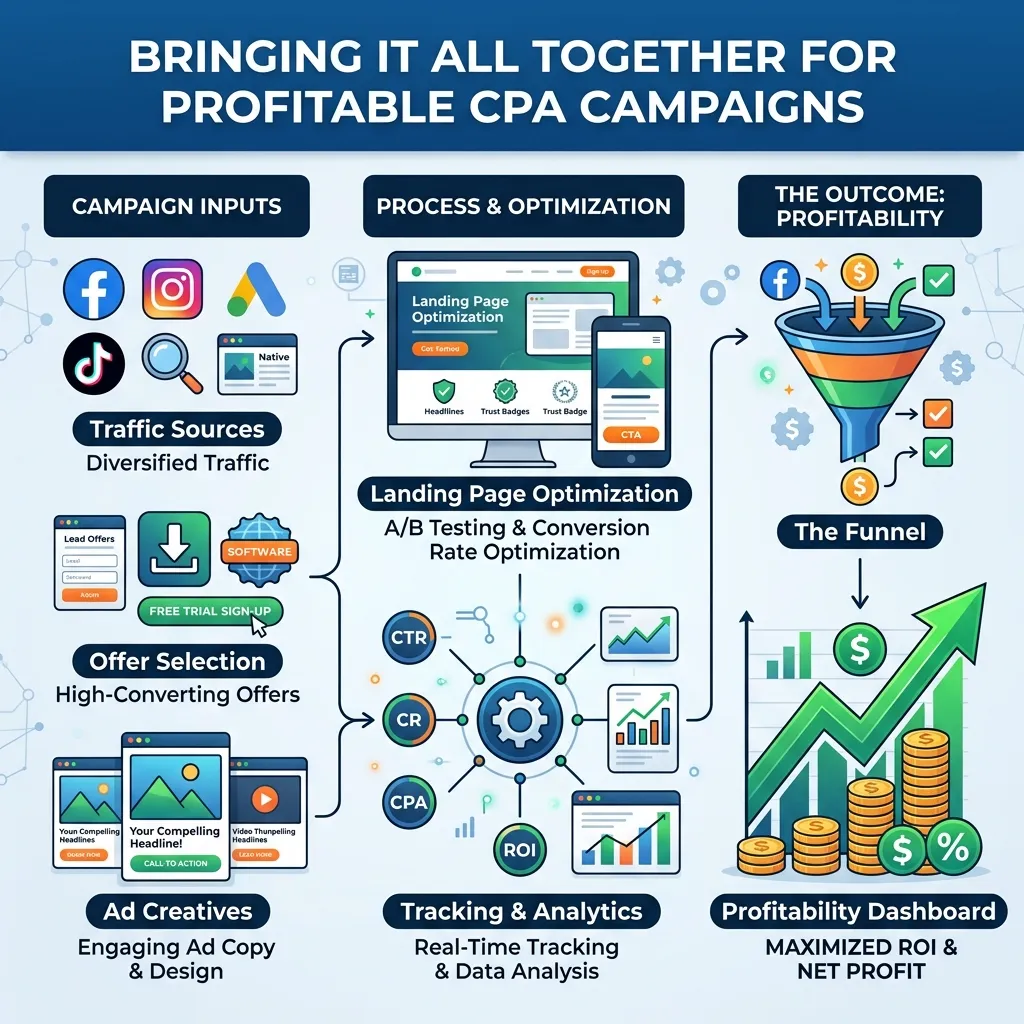
Most CPA failures aren’t bad luck—they’re the result of predictable, fixable mistakes. The biggest CPA Marketing Mistakes to Avoid come down to a few core habits: research your niche, choose High Converting CPA Offers, invest in CPA Landing Page Optimization, vet your traffic, track everything, stay compliant, and scale only when your data says so.
Layer in advanced moves like audience segmentation, sharp creatives, retargeting, and fraud detection, and you build campaigns that don’t just survive—they grow. Treat CPA marketing as a skill to develop rather than a shortcut to riches, and you’ll steadily avoid the Affiliate Marketing Mistakes that sink most beginners.
Start with one campaign, apply these principles, measure your results, and refine. That disciplined approach is what separates marketers who last from those who quit.
Frequently Asked Questions
What is CPA marketing?
CPA marketing is a performance-based marketing model where affiliates earn commissions when users complete specific actions such as sign-ups, downloads, or purchases. Understanding CPA marketing helps beginners avoid CPA Marketing Mistakes and build profitable campaigns from the beginning.
How can I avoid CPA Marketing Mistakes?
To avoid CPA Marketing Mistakes, start by researching your niche, selecting high-converting offers, tracking every campaign, optimizing landing pages, and testing regularly. Learning from common CPA Marketing Mistakes helps you improve your results and reduce wasted advertising costs.
What are High Converting CPA Offers?
High Converting CPA Offers are offers with simple conversion requirements, competitive payouts, and proven conversion rates. Choosing the right offers is one of the best ways to avoid CPA Marketing Mistakes and improve your campaign performance.
Why is CPA landing page optimization important?
Landing page optimization improves user experience, increases trust, and boosts conversion rates. Ignoring landing page optimization is one of the most common CPA Marketing Mistakes that can significantly reduce your earnings.
How often should I perform A/B testing?
A/B testing should be an ongoing process. Continuous testing helps identify winning headlines, creatives, and landing pages while preventing costly CPA Marketing Mistakes that negatively impact campaign performance.
How do I research a profitable niche?
Use keyword research tools, audience analysis, Google Trends, and CPA network insights to identify profitable niches. Proper niche research helps you avoid CPA Marketing Mistakes before investing time and money into campaigns.
How can I ensure my traffic is high quality?
Choose reputable traffic sources, monitor campaign analytics, and remove low-performing placements. Driving poor-quality traffic is one of the biggest CPA Marketing Mistakes, often leading to low conversions and poor ROI.
Which tools are best for CPA tracking?
Popular CPA tracking tools include Voluum, RedTrack, Binom, and BeMob. Using these platforms helps you monitor conversions, optimize campaigns, and avoid CPA Marketing Mistakes caused by inaccurate tracking or poor data analysis.
Can beginners make money with CPA marketing?
Yes. Beginners can successfully earn with CPA marketing by avoiding common CPA Marketing Mistakes, choosing quality offers, optimizing landing pages, tracking performance, and improving campaigns through consistent testing.
How can I build better relationships with CPA networks?
Communicate regularly with your affiliate manager, follow network guidelines, provide quality traffic, and maintain transparency. Strong relationships help reduce CPA Marketing Mistakes while giving you access to better offers, exclusive campaigns, and higher payouts.
What are the biggest CPA Marketing Mistakes?
The biggest CPA Marketing Mistakes include skipping niche research, promoting low-quality offers, ignoring landing page optimization, failing to track campaign data, using poor traffic sources, neglecting A/B testing, and scaling campaigns too quickly. Avoiding these CPA Marketing Mistakes is essential for building a profitable and sustainable CPA marketing business.


Comments (1)
Postback URL in CPA Marketing Explained: Setup & Guide Metasays:
August 20, 2026 at 7:06 am[…] campaigns underperform, since bad data leads directly to bad optimization decisions. Our guide on avoiding common CPA marketing mistakes covers several postback-related pitfalls in more […]